
SEO vs GEO vs AEO: How to Get Found on Google and AI Search
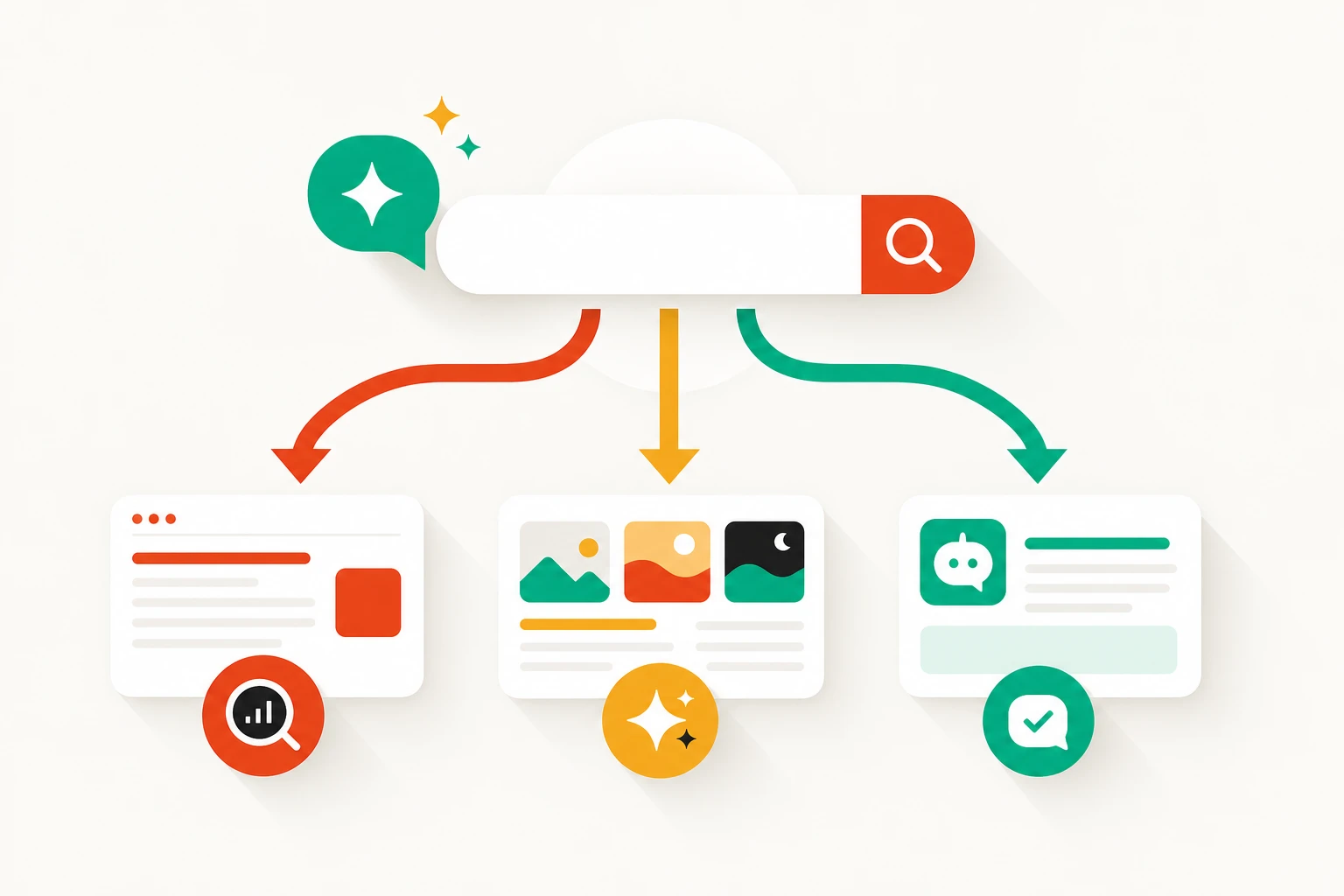
For twenty years, getting found online meant one thing: ranking on Google. That is changing fast. A growing share of buyers now ask questions to AI tools like ChatGPT, Google AI Overviews, Perplexity, and Gemini, and they often get an answer without ever clicking a blue link. If you only optimize for classic search, you are invisible to that audience. Here is how the three disciplines fit together, in plain language.
What is SEO?
Search Engine Optimization is the familiar one. It is the practice of helping your pages rank in traditional search results on Google and Bing. It rests on three pillars: technical health (fast, crawlable, well-structured pages), on-page optimization (clear titles, headings, and content that matches what people search for), and authority (quality links and a trusted brand). SEO is still the foundation, because most AI engines pull from the same web they always have.
What is GEO?
Generative Engine Optimization is about being included and cited when an AI writes an answer. When someone asks ChatGPT or Google AI Overviews a question, the model composes a response from sources it trusts. GEO makes your content easy for those models to understand, quote, and attribute. In practice that means clear, factual, well-structured writing, strong topical authority, and being referenced across the wider web, not just on your own site.
If SEO gets you ranked, GEO gets you quoted. Both matter, because buyers now split their attention between search results and AI answers.
What is AEO?
Answer Engine Optimization focuses on directly answering the specific questions people ask. It overlaps with GEO but leans into structure: concise question-and-answer content, featured-snippet-friendly formatting, and schema markup that tells engines exactly what a passage means. Anything that helps a machine lift a clean, correct answer out of your page is AEO.

How they overlap and work together
These are not three separate projects competing for budget. They are layers of one strategy. Good SEO makes your pages discoverable. GEO and AEO make that same content quotable and answer-ready for AI. Do the fundamentals well and you serve all three at once:
- Write genuinely helpful content that answers real questions.
- Structure it clearly with headings, short passages, and lists.
- Add schema so machines understand what each part means.
- Build authority and mentions across trusted sites.
What to do now: a practical checklist
- Fix the basics first: speed, mobile, crawlability, and Core Web Vitals.
- Answer your customers' real questions on clearly written pages.
- Add FAQ, article, and organization schema where relevant.
- Make sure AI crawlers can access your content and consider an llms.txt file.
- Track brand mentions in AI answers, not just keyword rankings.
The brands that win the next few years will be the ones that show up in both a Google result and an AI answer. It is very achievable, and it starts with content built for humans first and machines second.